
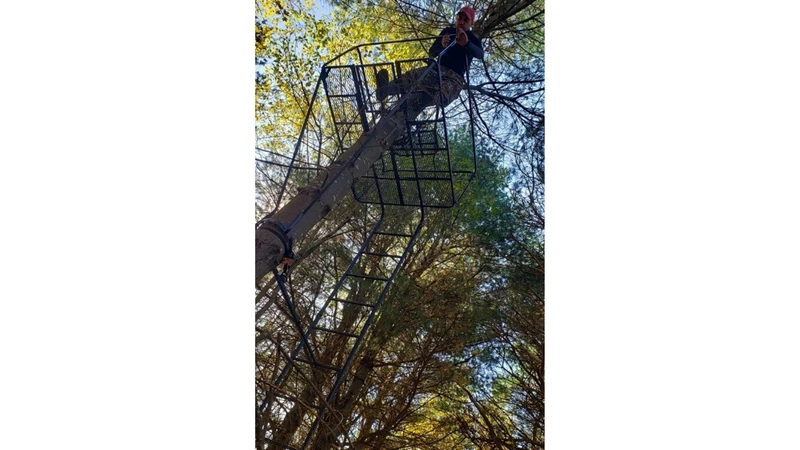
Treestand hunting has a long, storied tradition among whitetail hunters—and for good reason. Elevated platforms get you above a deer’s direct line of sight while significantly reducing ground-level scent distribution. A strategically placed treestand puts you in a commanding position before the animal ever suspects you're in the timber.
The challenge comes down to selecting the right setup. Most hunters find themselves weighing two primary categories: climbing treestands and ladder treestands. The right choice depends on your mobility requirements, physical endurance, comfort expectations, and the specific terrain you hunt.
What Is a Climbing Treestand?
Climbing treestands (or "climbers") are engineered for hunters who prioritize mobility and the ability to adapt to shifting deer patterns on public or pressured land.
A climber consists of two separate platforms—a foot platform and a seating section—that use cables or belts to "inchworm" up the trunk of a tree.
Advantages of Climbing Stands:
-
High Portability: Ideal for mobile, run-and-gun hunters packing in miles deep.
-
Adjustable Height: Allows you to climb as high as the tree and cover permit.
-
No Permanent Structure: Leaves zero trace, which is critical on heavily pressured public land.
Limitations to Consider:
-
Tree Restrictions: Climbers require straight, branchless trees (typically mature pine or straight hardwoods). Limbs and irregular trunks eliminate setup spots.
-
Physical Exertion: Packing in extra weight and manually climbing the tree creates sweat and odor right before your sit.
-
Restricted Shooting Angles: Traditional climber designs box you in, severely limiting shot angles behind the tree.
What Is a Ladder Treestand?
Ladder treestands prioritize structural stability, effortless access, and long-term positioning. Secured firmly against the tree trunk with a rigid ladder extending to the ground, ladder stands provide a rock-solid, spacious base.
Advantages of Ladder Stands:
-
Rock-Solid Stability: Zero platform wobble or shifting, encouraging calm, unhurried shot execution.
-
Long-Sit Comfort: Roomier seating and foot platforms reduce fatigue during all-day rut sits.
-
Quick & Silent Access: Once installed, slipping into your stand before dawn is quiet and effortless—no noisy climbing required in the dark.
Historically, the trade-off with traditional ladder stands was limited shot mobility. If a buck slipped behind the trunk, your shot window was gone.
Innovative platforms like the Reign360 Treestand solve this problem completely. Engineered with a true 360-degree walk-around platform, the Reign360 eliminates blind spots, allowing bow and crossbow hunters to maneuver smoothly around the tree to take the shot wherever the deer presents itself.
Climbing vs. Ladder Treestands: Side-by-Side Comparison
| Feature / Detail | Climbing Treestands | Ladder Treestands (e.g., Reign360) |
| Best Used For | Mobile, run-and-gun hunting | Pre-scouted funnel areas & permanent food sources |
| Setup Time on Hunt Day | 15–30 minutes of physical climbing | 30 seconds of quiet climbing |
| Tree Requirements | Straight, limb-free trunks only | Versatile; works on most stable mature trees |
| Shot Clearance | Restricted frontal arc | Full 360-degree walk-around access |
| Comfort & Stability | Moderate; compact footprint | Maximum; rigid frame & expansive platform |
| Popular Add-ons | Climbing sticks, transport straps | Field Seat, Height Kit upgrades |
| Country of Origin | Mostly imported components | 100% USA-Made Engineering |
How to Match a Treestand to Your Hunting Style
1. Identify Your Hunting Property
If you primarily hunt vast tracts of public land where leaving gear overnight is prohibited, a lightweight climbing setup or hang-on system offers necessary portability. However, if you manage private parcels, hunting leases, or well-established transition corridors, a fixed ladder stand delivers superior consistency and stealth.
2. Prioritize Archery Shot Clearance
For compound and crossbow hunters, trunk interference is the ultimate dealbreaker. When evaluating stands, consider how much mechanical clearance your bow limbs have. A walk-around ladder stand ensures you never have to contort your body awkwardly to shoot behind the tree.
3. Factor in All-Day Endurance
Fatigue causes fidgeting, and fidgeting spooks deer. If you plan on sitting through the late-season cold or the peak of the November rut, platform space and ergonomic seating—such as the customizable Field Seat upgrade—keep you attentive and motionless when it matters most.
Frequently Asked Questions
Do treestands really help with scent control?
Yes. Elevating your position helps elevate your thermal draft, keeping downwind scent currents above a deer's primary ground-level scent cone. While elevation never replaces wind awareness, it provides a crucial margin of error.
What game can be hunted from a treestand?
While whitetail deer are the primary target, treestands are widely utilized for black bear, wild hogs, and elk when hunting near water sources or pinch points.
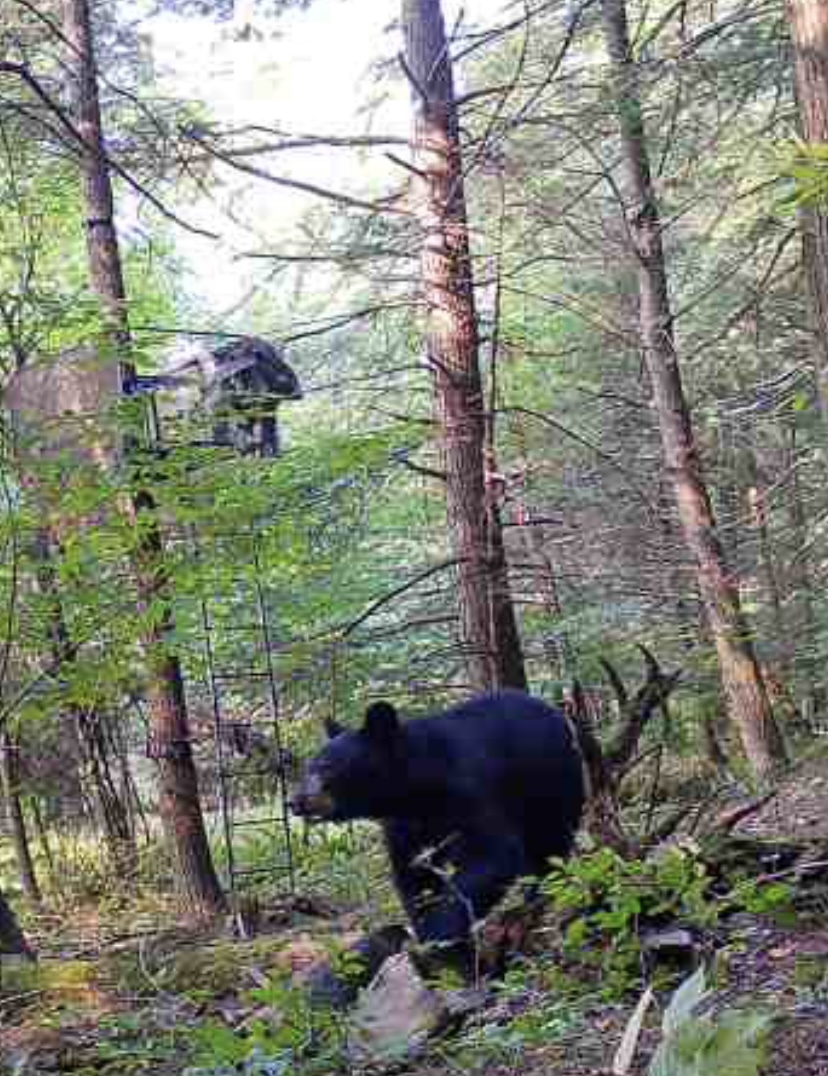
Real trail cam footage of a black bear walking directly under a Monarch setup.
Are ladder stands safer than climbing stands?
Both styles are safe when used with a certified Full-Body Fall Arrest Harness system. However, ladder stands offer greater structural stability and easier ingress/egress, especially in icy, wet, or low-light morning conditions.
Ready to Eliminate Blind Spots This Season?
Experience rock-solid, American-made engineering with a full 360-degree shooting platform.
? [Explore the Reign360 Walk-Around Treestand at Monarch Treestands]